Captain James Horatio Williams—Part III: A Sip Beneath the River
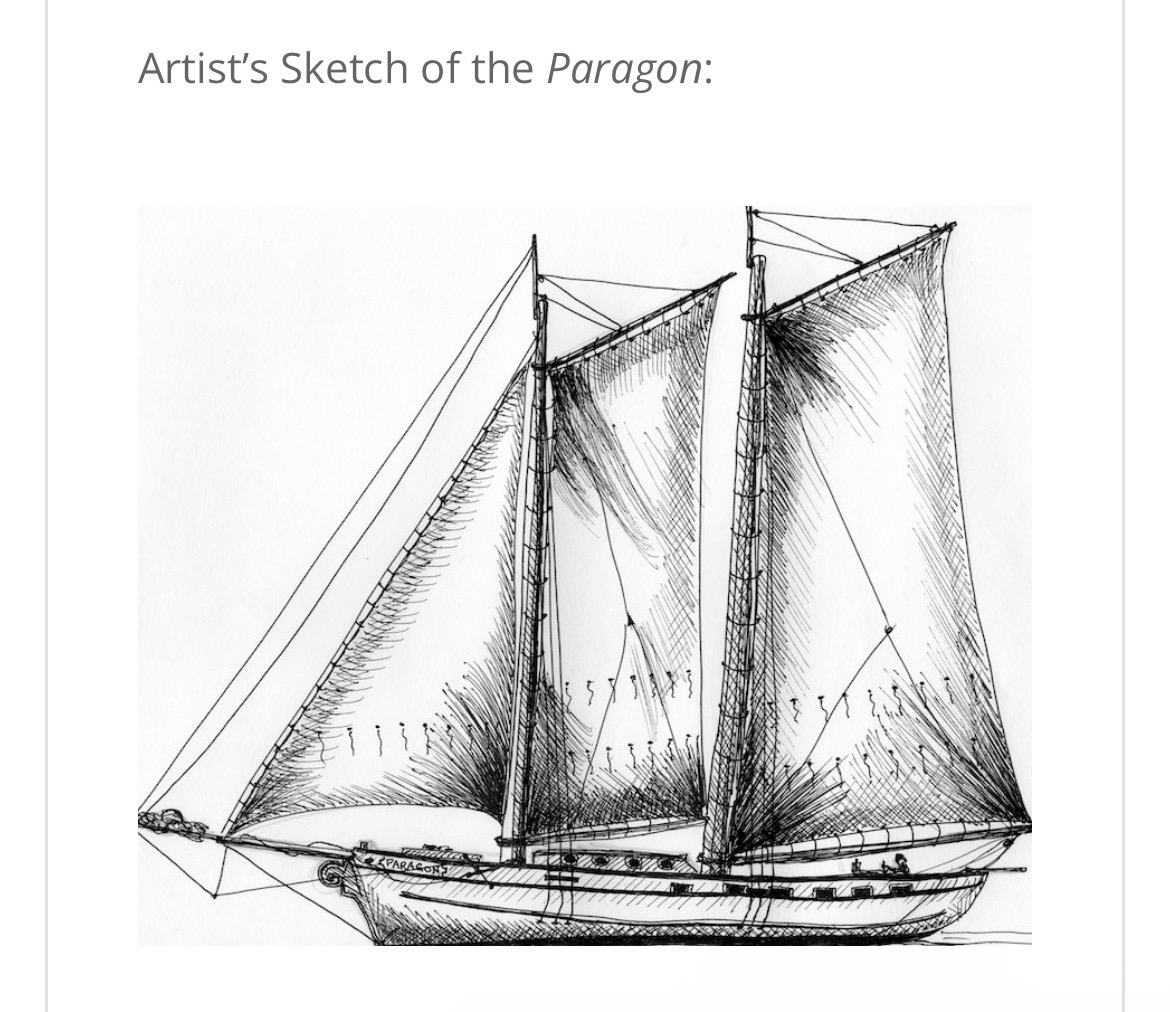
By the time Captain James Horatio Williams and his crew left Charleston Harbor behind, the Civil War had begun.
The opening shots fired at Fort Sumter on April 12, 1861, marked the beginning of a conflict that would last four long years and forever change the United States.
For Horatio, however, the immediate concern was not politics or military strategy. His livelihood rested beneath his feet aboard the Paragon, and his family was waiting for him on Ocracoke Island.
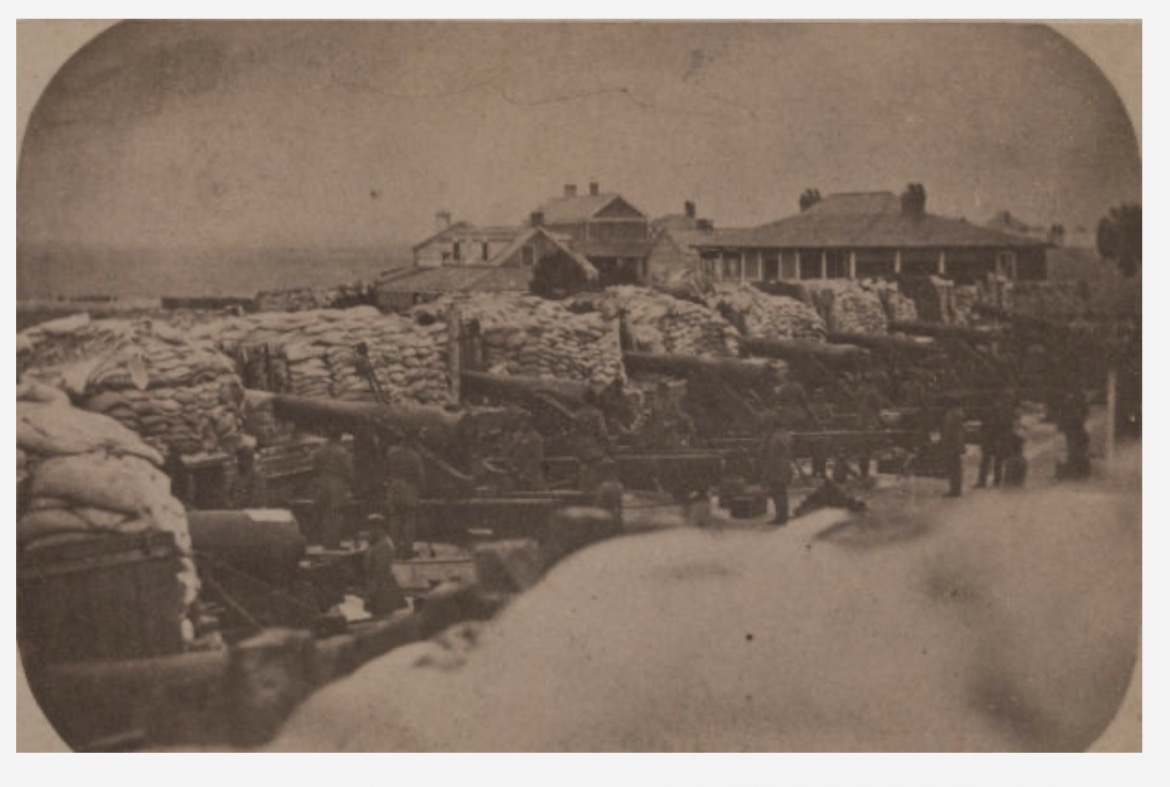 As the schooner sailed north, the danger did not disappear with Charleston fading below the horizon. The Union Navy was steadily tightening its blockade of the Southern coastline, and merchant vessels risked being seized, impressed into service, or destroyed. Horatio had escaped Charleston, but he knew the Paragon could still become another casualty of war.
According to the account later shared by his son, Horatio made a decision that puzzled his crew.
Rather than turn toward Ocracoke Inlet, he continued north.
One of the sailors finally asked why they were sailing past home. Horatio’s answer was simple:
“Keeping the Paragon safe from war”
The schooner continued toward the Roanoke River.
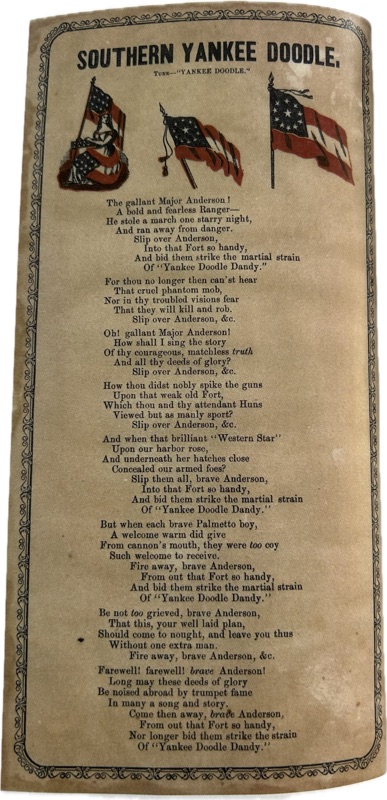
Confederate version of Yankee Doodle Dandy in which Major Robert Anderson is mocked for failing to hold Fort Sumter in April 1861
After nearly a week at sea, Horatio guided the Paragon into the fresh waters of the Roanoke. The wooded banks offered a secluded place far from busy shipping lanes and military patrols. Here, surrounded by towering oaks and dense undergrowth, he revealed his plan.
The Paragon would disappear.
The crew lowered the sails and carefully folded the canvas before carrying it ashore. Rather than leave the rigging exposed to the elements, they buried the sails nearby, hoping they would one day be used again.
Then came the hardest part.
Horatio entered the schooner’s hold and opened her to the river.
Slowly, water rushed inside.
The vessel that had carried cargo up and down the Atlantic coast for years gradually settled lower into the water. The crew climbed into a small dinghy and rowed toward shore, watching as the Paragon slipped beneath the surface. Soon only the tops of her masts remained visible above the quiet river.
Years of work and investment disappeared before their eyes.
Yet this was no act of surrender.
It was an act of preservation.
Horatio knew the fresh water would protect the ship’s timbers until peace returned. Built on Ocracoke in 1838 from live oak, red cedar, and planked with white oak by master shipbuilder Jobey Wahab, the Paragon was too valuable to risk falling into anyone’s hands.
With his beloved schooner safely hidden, Horatio and his crew traveled overland before finally making their way back to Ocracoke Island.
When Horatio returned home, Martha was nearing the end of her pregnancy. On June 20, 1861, just over two months after the bombardment of Fort Sumter, she gave birth to their fifth child, Brittie Ann Williams.
For the next five years, Horatio exchanged life as a merchant captain for life as a farmer. According to family tradition, he raised hogs, chickens, and crops, providing food not only for his own family but for many of Ocracoke’s residents throughout the hardships of the war. Although the Paragon rested beneath the waters of the Roanoke River, Horatio still owned a small fishing boat that allowed him to fish the surrounding waters and continue supporting his family.
Like much of North Carolina’s Outer Banks, Ocracoke soon came under Union occupation. Federal troops maintained a presence on the island, and local residents nicknamed the soldiers the “Buffalo”.
Family tradition describes Horatio as a man determined to stay out of the conflict. Although many of his relatives chose sides, he reportedly refused military service.
Whenever officers came looking for able-bodied men to join the war, Horatio somehow always managed to be away from home. Whether by careful planning or fortunate timing, he avoided enlistment throughout the conflict.
Another story passed down through his family illustrates both Horatio’s stubborn independence and Martha’s quiet practicality.
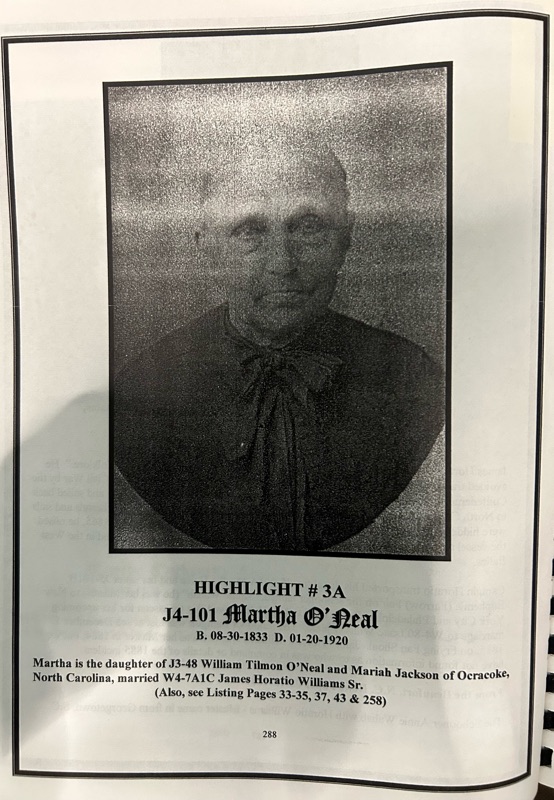 Photo from O'Neals of Ocracoke: Their Ancestors and Descendants by Earl O'Neal Williams Jr
As Horatio’s farm supplied food to the island, Union soldiers occasionally came to purchase meat and produce. Horatio refused to sell anything to the Buffalo. The soldiers reminded him they had the authority to simply take what they needed but were offering to pay for it instead.
Without saying another word, Horatio turned and walked away.
Left standing with the soldiers, Martha calmly told them to take what they needed and leave the money beneath a nearby rock. The arrangement allowed the family to be paid for their goods while sparing Horatio from personally doing business with the occupying troops.
Whether every detail happened exactly as remembered cannot be known. What these stories reveal, however, is how Horatio’s family remembered him: a fiercely independent man who preferred honest work over war, who devoted himself to providing for his family, and who remained determined to avoid taking up arms despite living in the middle of one of America’s greatest conflicts.
Meanwhile, beneath the still waters of the Roanoke River, the Paragon waited.
For more than four years, the schooner rested exactly where Horatio had left her. Hidden from both Union and Confederate forces, she remained remarkably well preserved beneath the fresh water, patiently awaiting the day her captain would return.
Horatio had trusted that one day peace would come.
He was right.
Join me for Part IV as the Civil War comes to an end and how Horatio resumes the life he loved on the sea.


Comments
Post a Comment