James Horatio “Horatio” Williams—Part IV: TheParagon Sails Again
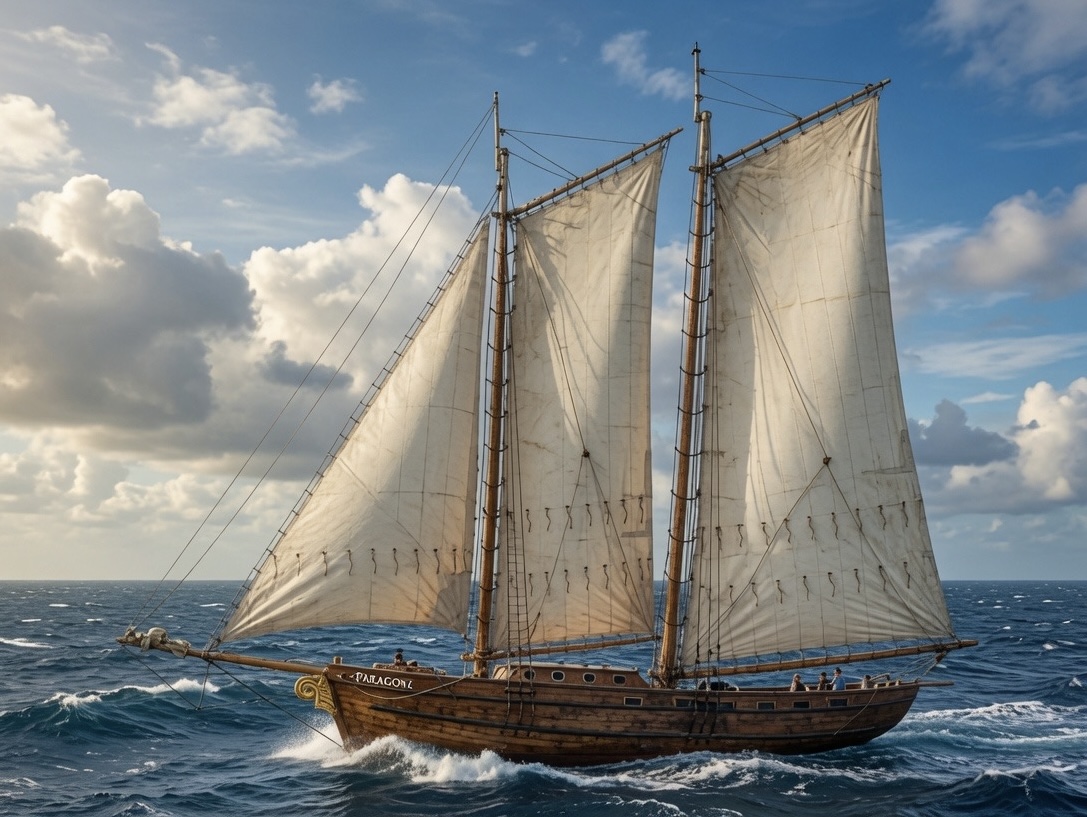
For four long years, the Paragon rested silently beneath the waters of the Roanoke River.
While armies marched, battles raged, and the nation endured the bloodiest conflict in its history, Captain James Horatio “Horatio” Williams waited. He had trusted that fresh water would preserve his beloved schooner until peace returned.
In the spring of 1865, the Civil War finally came to an end.
Even then, Horatio did not immediately retrieve the Paragon. According to family tradition, nearly eighteen months passed before he was ready to undertake the difficult task of raising the vessel from the riverbed.
By then, the man who had built the schooner, Jobey Wahab, had passed away. Horatio traveled to the mainland to seek the help of Jobey’s son, Henry Wahab. Together with several other men, they returned to the place where Horatio had hidden the Paragon years before.
No one knew what they would find.
Had the schooner survived?
Or had four years beneath the river claimed her forever?
Using barrels as pontoons, the men slowly lifted the vessel until her decks broke the surface. Then, with hand-operated pumps, they removed the water that had filled her hold.
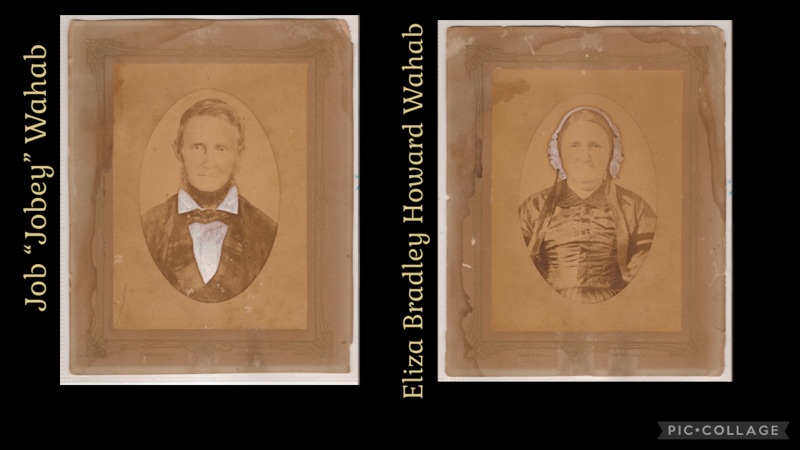
Paragon builder Jobey Wahab and wife Eliza
The results were astonishing.
The fresh water had protected the Paragon’s timbers just as Horatio had hoped. Built in 1838 from Ocracoke live oak, red cedar, and white oak, the sturdy schooner had suffered remarkably little damage. Even the sails Horatio had buried along the riverbank years earlier were unearthed and found to be in usable condition.
The gamble he had taken in the opening days of the Civil War had succeeded.
The Paragon sailed again.
Once restored, she made the journey back down the Roanoke River, across Albemarle and Pamlico Sounds, and through Ocracoke Inlet to the waters she knew so well. Before long, Horatio was once again carrying freight along the Atlantic coast between North Carolina and South Carolina.
As life returned to normal, so did the Williams household.
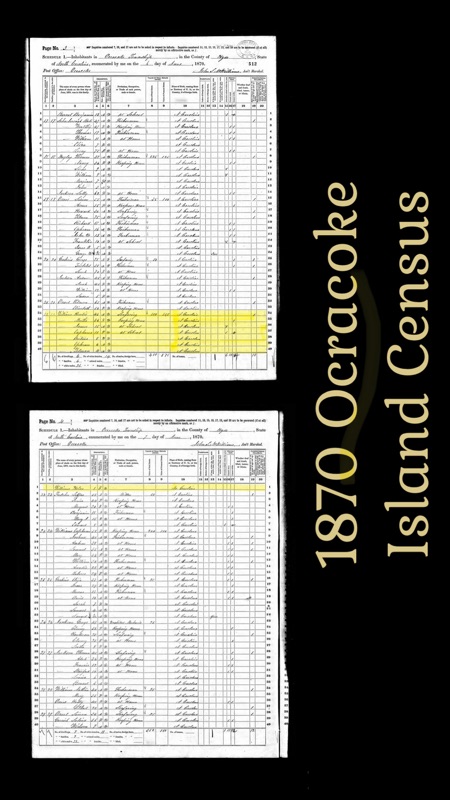
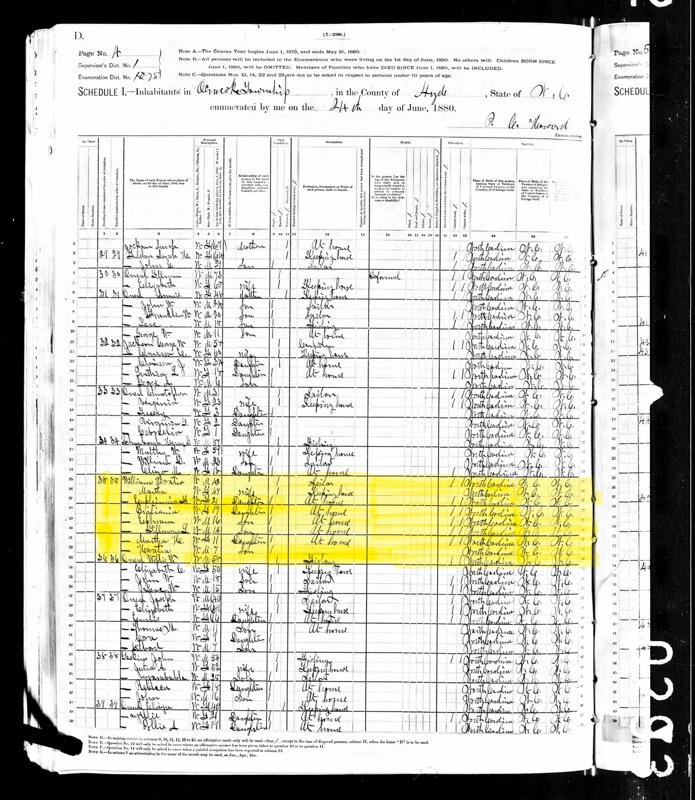
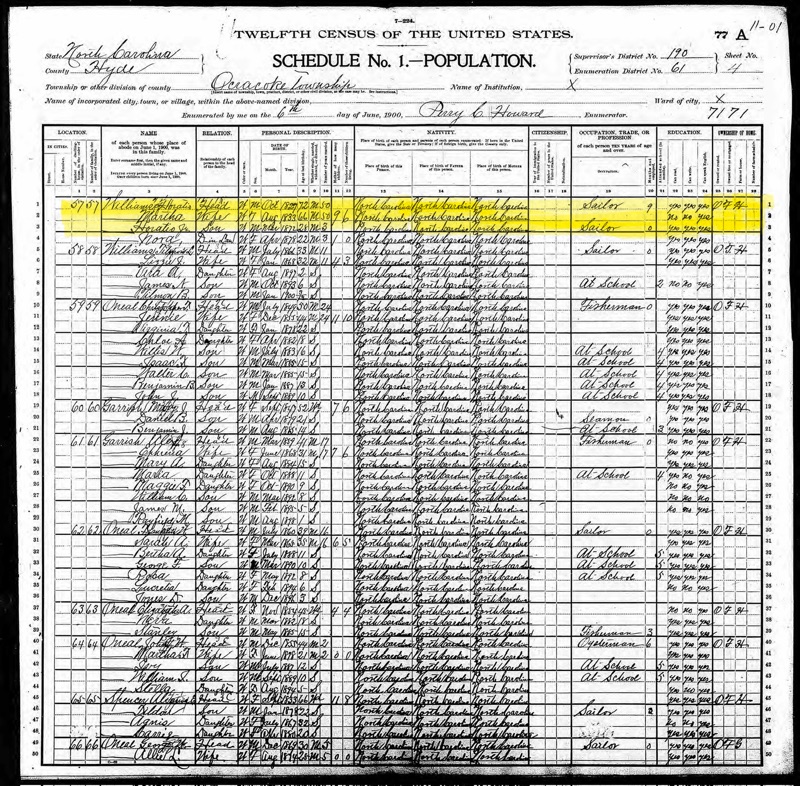
On July 4, 1866, Horatio and Martha welcomed their seventh child, Tilmon L. Williams. Three years later, on June 25, 1869, their eighth child, Martha Helen Williams, was born. Their youngest child, James Horatio Williams Jr., arrived on March 10, 1873. Decades later, it would be James Jr. who preserved many of his father’s memories, ensuring that Horatio’s remarkable experiences aboard the Paragon would not be forgotten.
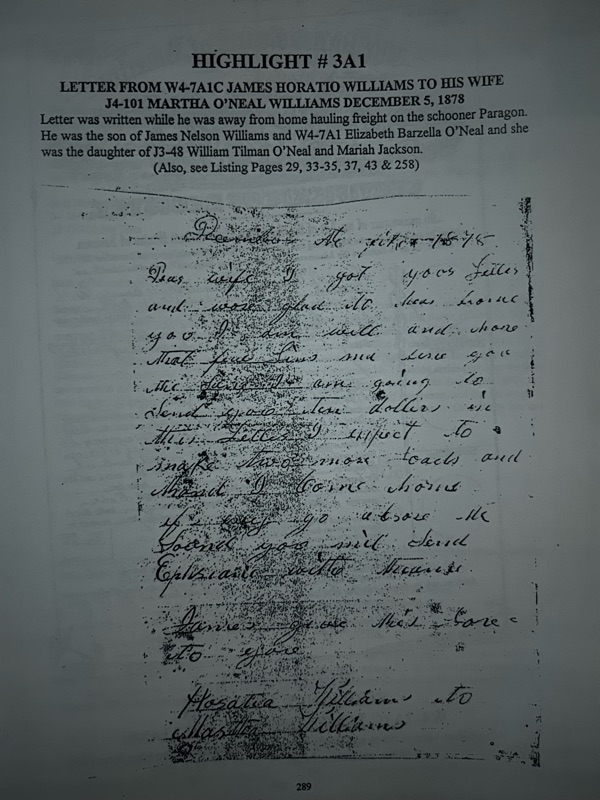
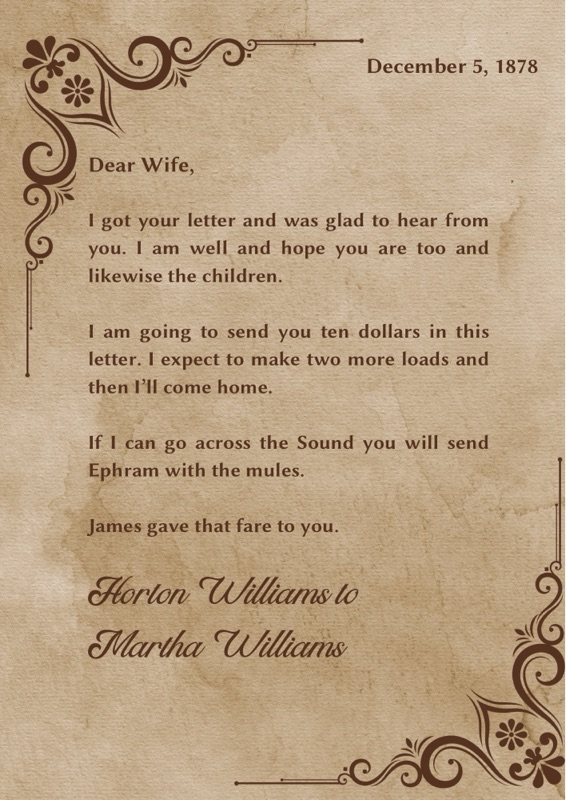
Letter written to Martha from Horatio while he was out at sea. This letter can be found in The O'Neals of Ocracoke: Their Ancestors and Descendants by Earl Williams O'Neal Jr. This letter has been transcribed to the best of my ability. Some words remain uncertain and the transcription may not be entirely accurate.
James Jr. remembered sailing with his father aboard the Paragon as a boy. He recalled a crew of six: three sailors, a mate, a cook, and Horatio serving as captain. The schooner could carry approximately eighty-five tons of cargo and drew about eight feet of water. He also remembered his father ordering the cabin doors sealed with turpentine soap before crossing Ocracoke Inlet on trips south to Charleston, helping keep seawater from entering the hold during rough weather.
Among the stories James Jr. loved to tell was one that perfectly captured his father’s sense of humor.
A preacher once sailed aboard the Paragon and was troubled by the language he heard from the crew. After listening to Horatio sharply direct his sailors, the minister gently scolded him.
“Cussing doesn’t do any good,” the preacher insisted.
Horatio simply nodded.
A short time later, after the preacher had gone below, Horatio quietly gathered his crew and explained his plan.
“When the preacher comes back on deck,” he told them, “I’m going to politely ask you to take in the topsail. Don’t move.”
The crew grinned and agreed.
When the preacher returned, Horatio calmly called out, “My good men, take in the topsail.”
Nothing happened.
He repeated the order.
Still nothing.
A third time he politely asked.
Again, the sailors ignored him.
Finally, Horatio shouted a colorful command in language more familiar to nineteenth-century sailors than Sunday sermons.
Instantly, the crew sprang into action and the topsail came down.
The preacher watched the entire exchange before shaking his head with a smile.
“Well,” he admitted, “I’ll be darned… I believe a little cussin’ does help sometimes.”
Whether polishing brass in Charleston Harbor, hiding a schooner beneath the Roanoke River, farming through the hardships of war, or sharing a laugh with his crew at sea, Captain James Horatio “Horatio” Williams lived a life that reflected the determination and resourcefulness of Ocracoke’s early mariners.
He died on November 17, 1908, leaving behind far more than census records and dates on a family tree. He left a story.
Martha O’Neal Williams survived her husband by more than eleven years, passing away on January 20, 1920.
Today, because James Horatio Williams Jr. shared his father’s memories, we can still follow Horatio’s remarkable journey from orphaned boy to merchant captain, from witness to the opening of the Civil War to the man who hid his schooner beneath a river and lived to sail her again.
For me, that’s what family history is all about. It’s more than discovering names and dates. It’s recovering the lives behind them, preserving their stories, and ensuring that generations yet to come will know the people who helped shape our family’s past.


Comments
Post a Comment