
Part II — Loss, War, and Leaving Home (1860–1862)
The first great loss of Allen and Seny’s marriage came quietly, the way so many tragedies did in the nineteenth century. By the time the 1860 census was taken on September 5th, the couple had a one-month-old daughter. She did not survive infancy. No record explains what took her, only the understanding that in an era before modern medicine, loss like this was heartbreakingly common.
In the mid-1800s, nearly one in five children did not live to see their first birthday. For families like Allen and Seny’s, grief was woven into daily life. And yet, life pressed forward.
After that loss, Allen and Seny welcomed another child. Fannie Davis was born on April 17, 1862, a son whose arrival brought renewed hope to a household already shaped by sorrow. For a brief moment, their world narrowed again to the familiar rhythms of family, work, children, and the fragile promise of continuity.
But the country around them was coming apart.
By 1861, the United States was at war with itself. North Carolina initially hesitated to secede, but when President Abraham Lincoln called for troops following the attack on Fort Sumter, the state withdrew from the Union. What had once felt like distant political debate quickly became a personal reckoning for families across Granville County.
Men began leaving home in increasing numbers. Some volunteered out of loyalty to their state, others under pressure from neighbors and kin. Many believed the war would be short. Few imagined the scale of loss that lay ahead.
For women left behind, daily life changed almost overnight. They took over farms and households, managed children alone, and learned to live with uncertainty as a constant companion.
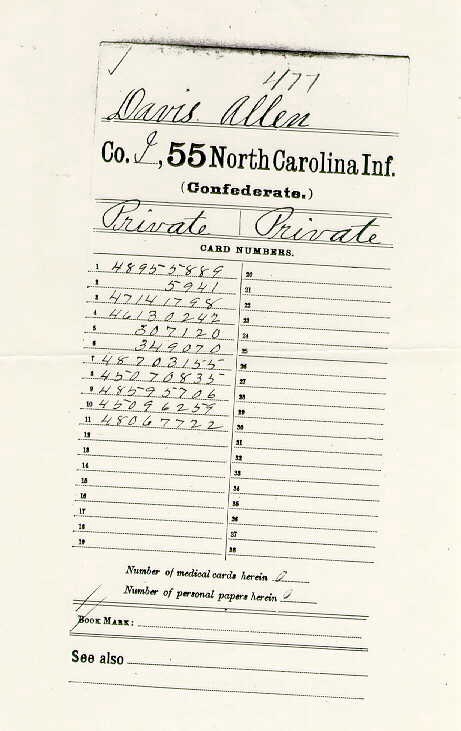
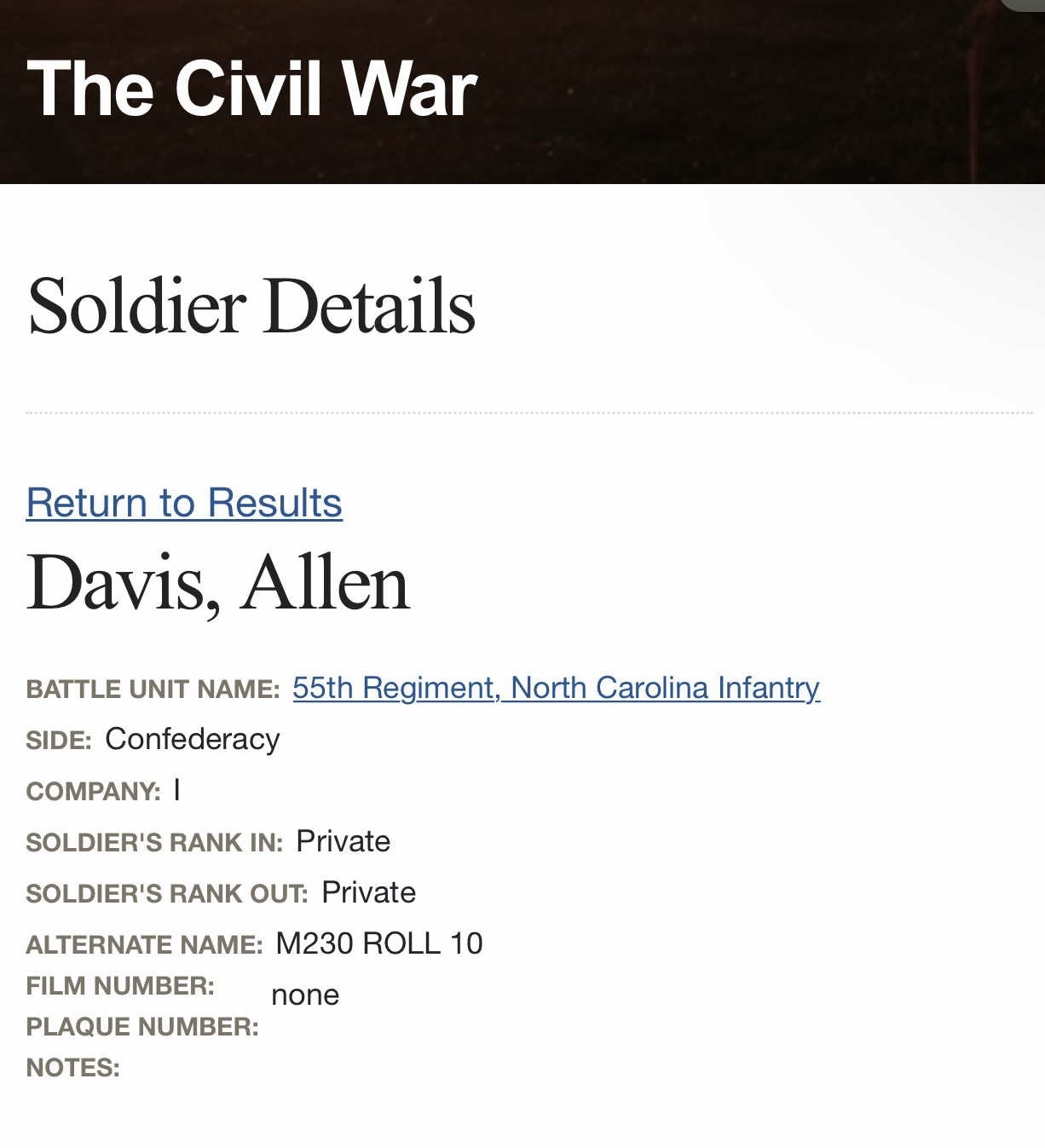
By the fall of 1862, the war could no longer be ignored. On October 2, 1862, 27-year-old Allen Davis left home for Camp Mangum in Raleigh, where he enlisted in Company I of the 55th North Carolina Infantry Regiment. Leaving behind a pregnant wife and a young mother with two children and no reliable way of knowing when, or if, he would return.
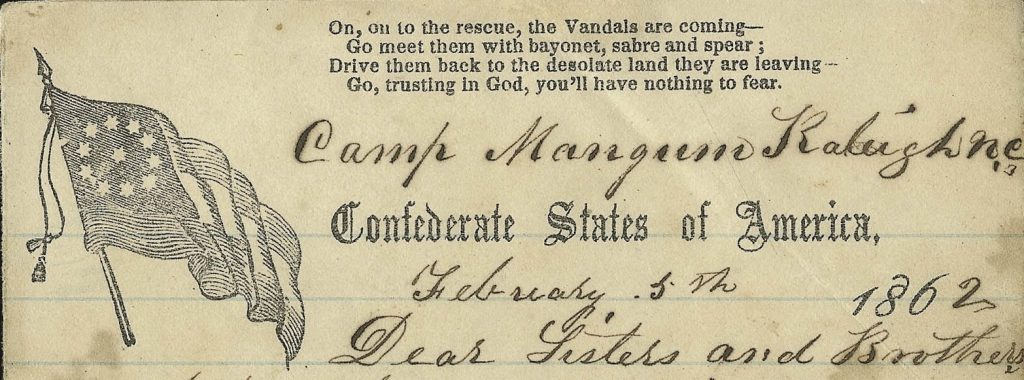
Official Camp Mangum letterhead
Camp Mangum was one of several training camps established to prepare North Carolina troops for Confederate service. The conditions were harsh. Rows of tents offered little protection from the weather, food was limited and poorly prepared, and disease spread quickly. Many men fell ill before ever reaching a battlefield.
For Allen, enlistment meant stepping into a world governed by orders, drilling, and long marches. For Seny, it meant learning how to run a household alone in a time of scarcity and fear.
There were no telephones. Alexander Graham Bell’s first successful phone call would not occur until 1876, more than a decade away. Communication depended entirely on letters; letters that could take weeks or months to arrive, if they arrived at all. Once Allen marched away, Seny had no way of knowing where he was sent, what battles he might fight, or whether he was even still alive.
In 1863, while Allen was away with his regiment, Seny gave birth to another son, Gordon. Like countless Civil War wives, she entered motherhood again without her husband present, carrying the weight of survival, parenting, and fear alone. With two young children depending on her, Seny faced the war not just as a wife left behind—but as a mother determined to keep her family intact amid silence. Times like these shows the importance of community.
By the summer of 1863, Allen and the 55th North Carolina were on the move. As infantry, they traveled entirely on foot, marching hundreds of miles with heavy packs, worn shoes, and limited food. The regiment was swept into General Robert E. Lee’s second invasion of the North, a campaign meant to shift the balance of the war.
Allen marched north unaware that within weeks he would be captured, imprisoned, and swallowed into a system that would leave his wife with no answers—only waiting.
The next chapter would place him on one of the most famous and deadly battlefields in American history.



No comments:
Post a Comment